 Over 5,000 5-Star Ratings on Google!

 559-601-0833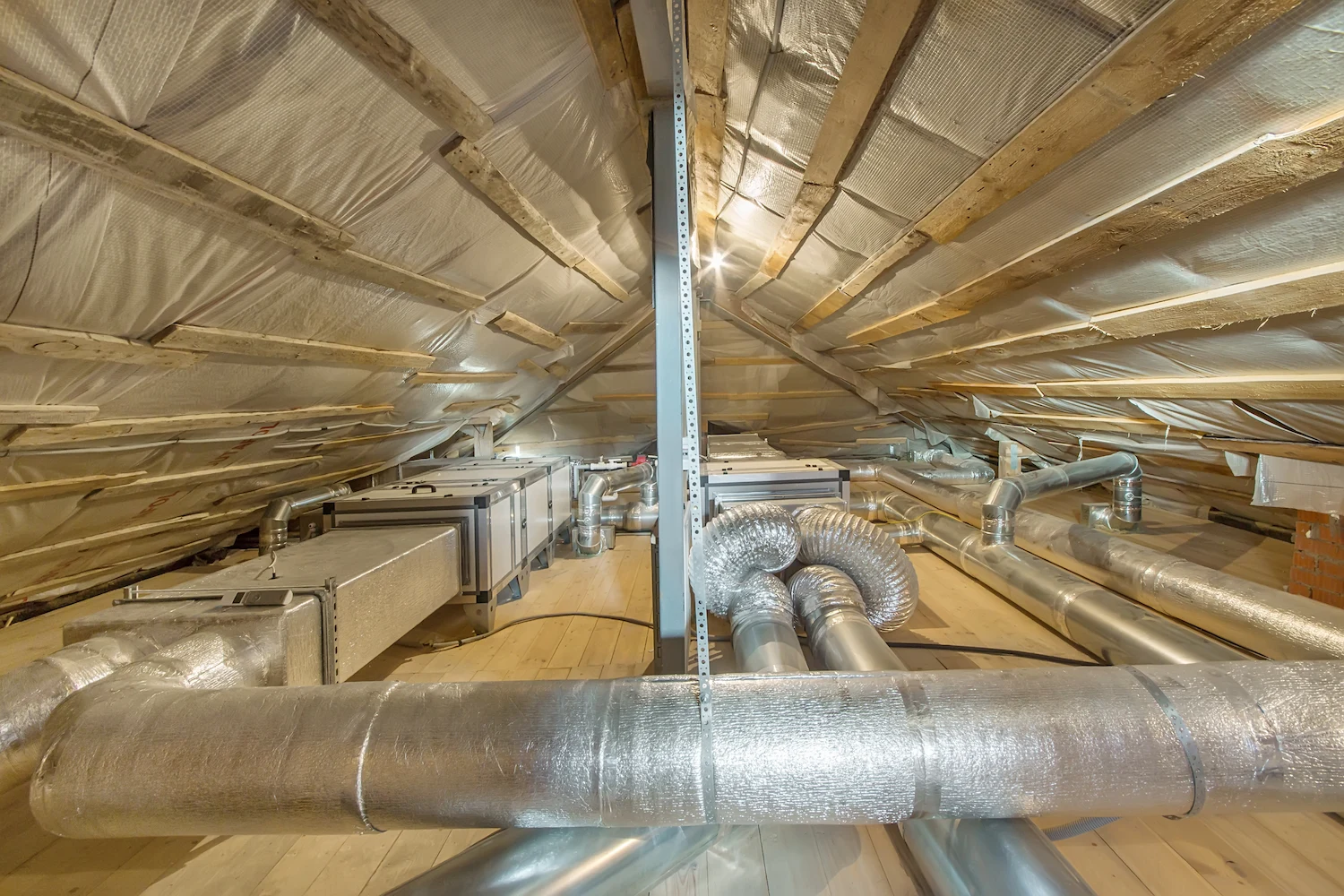
Most Fresno homeowners focus on the air conditioner when their house is not cooling well. They replace the filter, schedule a service call, or consider a new system entirely. What they rarely consider is the ductwork delivering the conditioned air from that system to every room. In a typical home, according to ENERGY STAR and the U.S. Department of Energy, 20 to 30 percent of the air moving through the duct system never reaches the living space. It leaks out through cracks, gaps, and poorly connected joints into attics, wall cavities, and crawl spaces instead.
In a Fresno home running the AC hard from May through October, that loss is not an abstraction. It is a measurable fraction of every dollar spent on cooling disappearing into unconditioned space, while rooms stay stubbornly warmer than the thermostat setting. It is the AC system working longer and harder than it should, adding wear and shortening its service life.
Aeroseal duct sealing is a patented technology that addresses this problem from the inside of the duct system, without tearing open walls or ceilings. Here is how it works, what it addresses, and how to know whether your home is a good candidate.
Why Duct Leakage Is Worse Than Most Homeowners Realize
ENERGY STAR estimates that in a typical home, about 20 to 30 percent of the air that moves through the duct system is lost due to leaks, holes, and poorly connected ducts. The result is higher utility bills and difficulty keeping the house comfortable, no matter how the thermostat is set.
The problem is compounded by where most ducts run. In Fresno homes, ductwork commonly passes through attic spaces that reach 140 to 160 degrees Fahrenheit on peak summer days. When a duct joint leaks in that environment, the system is not just losing conditioned air: it is drawing in superheated attic air that undermines the cooling capacity of every cubic foot of air it does deliver. A system that should be producing 72-degree air at the register may be delivering air several degrees warmer because of what has mixed in along the way.
Traditional approaches to duct sealing, applying mastic paste or foil tape to accessible joint sections, address only the portions of ductwork a technician can physically reach. For ducts buried in attic insulation, routed through wall cavities, or tucked into crawl spaces, those methods cannot reach the leaks. That is the problem Aeroseal was designed to solve.
How Aeroseal Works
Aeroseal duct sealing technology was originally developed at Lawrence Berkeley National Laboratory with funding from the U.S. Department of Energy. The DOE recognized it as one of the 23 most beneficial technologies available to American consumers since the agency was established.
The process works from inside the duct system rather than from the outside. A certified technician temporarily seals all supply and return vents throughout the home, then connects the Aeroseal machine to the duct system through a single access point. The machine pressurizes the ductwork and injects a non-toxic, water-based polymer sealant in aerosol form. As pressurized air seeks to escape through every leak in the system, it carries the sealant particles with it. Those particles are too large to pass through intact duct walls, so they accumulate along the edges of gaps and holes, building up layer by layer until each opening is sealed.
Because the sealant travels with the airflow to wherever air is escaping, it reaches leaks in locations that would be inaccessible to any manual sealing method, including joints deep inside attic insulation and connections inside wall cavities. The process seals gaps up to five-eighths of an inch in diameter.
A computer monitors duct pressure throughout the process and generates a before-and-after report showing the exact reduction in air leakage. At the end of the job, the homeowner receives documentation of what was measured, what was sealed, and how much leakage remains. The sealant dries within about 30 minutes and the system can be restarted the same day.
Signs Your Home May Have Significant Duct Leakage
Duct leakage is invisible by design. The leaks are inside the system, in locations no homeowner can see. But the effects show up consistently:
- Rooms that are noticeably warmer than others, especially those farthest from the air handler, even when the system is running continuously
- Weak airflow from specific registers compared to others in the home
- Energy bills that seem high relative to the size of the home and the thermostat setting
- A system that runs almost constantly during peak summer heat without maintaining the set temperature
- Excessive dust accumulation throughout the home, particularly on surfaces near registers
- The home was built before the late 1990s and the ductwork has never been professionally evaluated
Any one of these patterns is worth investigating. Several of them together make a strong case for a duct leakage assessment before investing further in the AC system itself.
Aeroseal vs. Traditional Duct Sealing: The Key Difference
Traditional duct sealing requires a technician to physically apply mastic sealant or UL 181-rated foil tape to duct connections they can see and reach. For exposed ductwork in a basement or garage, this is a reasonable approach. For the majority of residential duct systems, where ducts run through attics and inside walls, traditional sealing only addresses a fraction of the total leakage surface.
Aeroseal reaches the entire duct system regardless of where components are located. It treats the system as a sealed pressure vessel and delivers sealant to wherever air is escaping, including the joints and seams that no technician can physically access. For homes with significant hidden leakage, the performance difference between the two approaches is not marginal.
Aeroseal also provides measurable verification. Traditional sealing is applied by feel and judgment. The Aeroseal process measures leakage before and after and provides a printed report. That documentation also carries value for homeowners who want to demonstrate system improvements for insurance, energy efficiency programs, or resale purposes.
What Aeroseal Duct Sealing Addresses Beyond Energy Loss
Duct leakage is an energy problem, but it is also a comfort and air quality problem. Leaking return ducts operating under negative pressure draw air into the duct system from wherever it can enter: attic spaces, wall cavities, and crawl spaces that contain insulation fibers, dust, rodent activity, and in wildfire-prone regions like Fresno, smoke particulates. That air then circulates through every room in the home.
Sealing the duct system eliminates those infiltration pathways. The air being conditioned and delivered to the living space comes from inside the home, passes through the system’s filter, and arrives where it is intended. For households with occupants who have asthma, allergies, or respiratory sensitivities, this is a meaningful health improvement, not just an efficiency gain.
Sealed ductwork also supports more even temperature distribution throughout the home. When conditioned air reaches every room at the intended volume and pressure, hot spots that have been accepted as permanent features of the house often resolve without any changes to the AC system itself.
Frequently Asked Questions
How long does an Aeroseal duct sealing appointment take?
A residential Aeroseal appointment typically takes four to eight hours from setup through completion. The sealant dries within approximately 30 minutes of the injection phase concluding, after which the system can be restarted. Most homeowners are back to normal operation the same day.
Is the Aeroseal sealant safe for my family and pets?
The Aeroseal sealant is a non-toxic, water-based polymer. The base material is the same compound used in products including vinyl gloves and medical-grade tubing. The manufacturer and independent testing confirm it is safe for occupied homes. You will need to be out of the home during the injection process itself, which typically takes one to two hours of the total appointment time.
Can Aeroseal fix all types of duct leaks?
Aeroseal is highly effective for the small-to-medium gaps, cracks, and separated joints that account for most residential duct leakage. It seals openings up to five-eighths of an inch in diameter. Severely damaged or disconnected duct sections may require physical repair before Aeroseal sealing can be performed. A pre-job assessment identifies any conditions that require conventional repair first.
Will duct sealing make a noticeable difference in my energy bills?
For homes with significant leakage, yes. The degree of improvement depends on how leaky the ducts were before sealing and where in the system those leaks were located. Leaks in attic ductwork, where the temperature differential between the conditioned air and the surrounding space is greatest, produce the largest energy gains when sealed. Your technician’s before-and-after report will document the specific leakage reduction achieved in your system.
A Better AC System Starts With the Ducts Delivering Its Air
Upgrading an air conditioner in a home with significant duct leakage is like replacing a car engine without fixing the exhaust system. The new equipment works harder than it should, delivers less than it is capable of, and wears faster than it would in a properly sealed system. For many Fresno homeowners, addressing duct leakage produces a more meaningful improvement in summer comfort and energy efficiency than any change to the AC equipment itself.
Allbritten is a certified Aeroseal provider serving Fresno and the San Joaquin Valley. If your home is showing signs of duct leakage, or if you want to know how your system measures before committing to other HVAC investments, learn more about our Aeroseal duct sealing service or call 559-601-0833 to schedule an assessment.