 Over 5,000 5-Star Ratings on Google!

 559-601-0833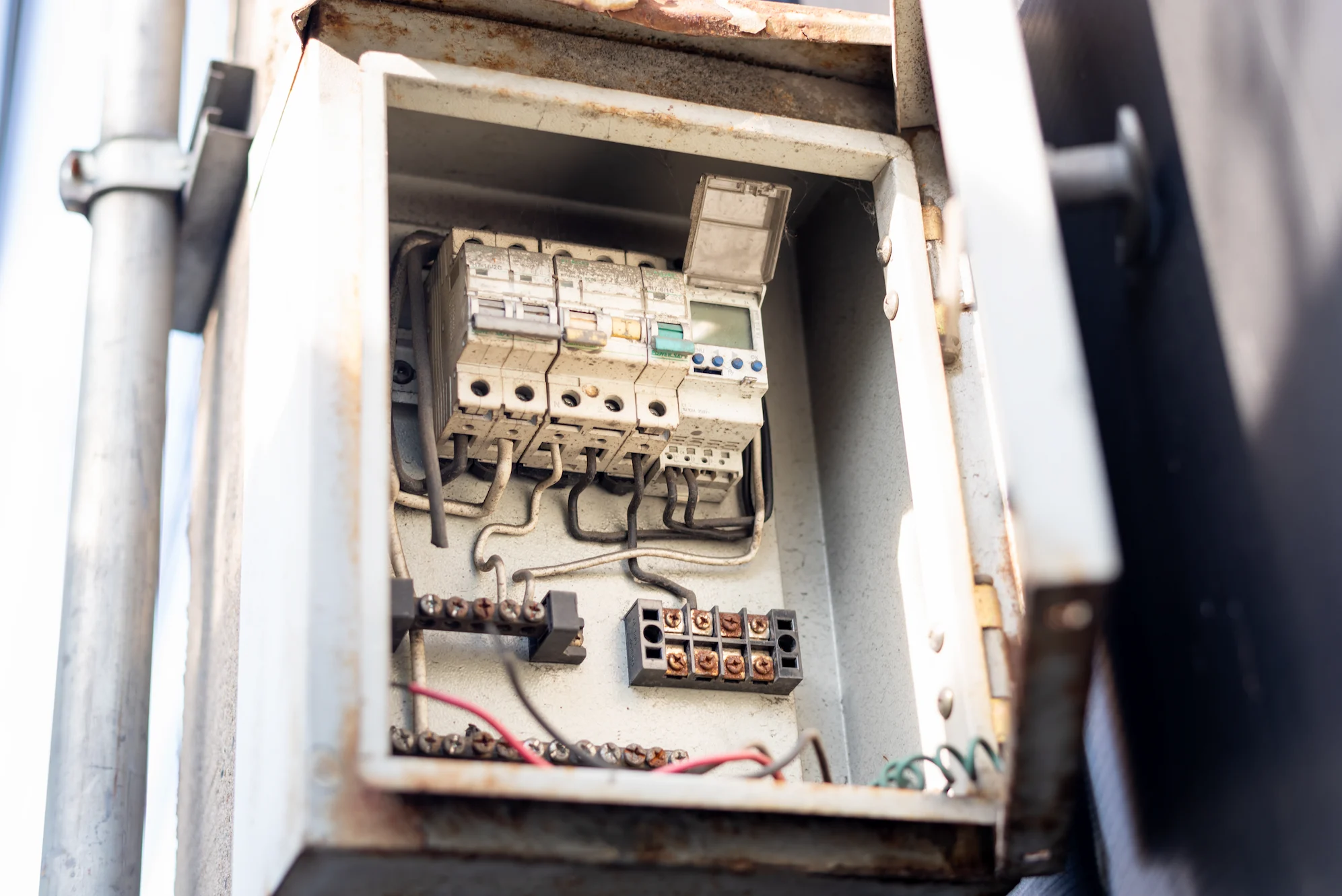
Most Fresno homeowners never think about their electrical panel until a breaker trips. That moment of inconvenience is actually the panel doing exactly what it is supposed to do: cutting power before a circuit overloads and causes a fire. But faulty or outdated electrical panels can fail silently. No tripped breaker. No warning light. Just wiring that gets hotter and hotter until it ignites the insulation or framing around it.
According to the Electrical Safety Foundation International, arcing faults alone start more than 28,000 home fires in the United States every year. A significant number of those fires trace back to electrical panels that were never designed to handle modern energy demands, or that were manufactured with documented defects.
If your home in Fresno was built between the 1950s and the 1990s, there is a meaningful chance your panel falls into one of those categories. Here is what every homeowner in that situation needs to know.
Why Your Electrical Panel Is Your Home’s First Line of Defense
Your electrical panel, also called a breaker box or load center, is the hub through which all power entering your home is distributed to individual circuits. Each circuit is protected by a breaker: a switch designed to trip automatically if that circuit draws more current than it can safely carry.
This tripping function is not a nuisance. It is a fire-prevention mechanism. When a circuit overloads, the wiring heats up. If the breaker does not cut power quickly, that heat can reach the ignition point of surrounding wood framing, insulation, or other materials. The breaker exists to stop that from happening.
A panel that trips reliably is doing its job. A panel that does not trip, or that trips inconsistently, is a fire hazard. That distinction matters because some of the most widely installed panels of the mid-twentieth century are known to have serious problems with exactly that function.
The Panels Most Likely to Put Your Home at Risk
Two panel brands installed extensively across the United States from the 1950s through the 1990s have well-documented failure histories: Federal Pacific Electric and Zinsco. Both continued to appear in homes for decades after their problems were identified. Both are still present in a significant number of Fresno-area homes today.
Federal Pacific Electric (Stab-Lok)
Federal Pacific Electric panels, identifiable by the Stab-Lok® name printed inside the breaker compartment, were among the most widely sold panels in the country from the 1950s through the 1980s. Testing conducted by the Consumer Product Safety Commission (CPSC) and independent researchers found that these breakers failed to trip in a substantial share of tests. Research by electrical engineer Jesse Aronstein, published in a peer-reviewed paper, estimates that FPE Stab-Lok panel failures may be responsible for approximately 2,800 fires, 13 deaths, and $40 million in property damage annually.
The manufacturer, Reliance Electric, later acknowledged in a Securities and Exchange Commission filing that a possible defect existed and that the process used to obtain Underwriters Laboratories certification had involved improper practices. UL subsequently revoked its listing for most FPE products. Despite all of this, no formal recall was ever issued. Millions of these panels remain in homes across the country.
To check whether you have a Federal Pacific panel: look for the Federal Pacific logo on the panel cover, open the panel door and look for the Stab-Lok name inside, and check for orange breaker handles with a red strip across the front.
Zinsco (Also Sold as GTE-Sylvania and Challenger)
Zinsco panels were particularly common in the western United States, including California, during the 1960s and 1970s. When the company was sold to GTE-Sylvania in 1973, production continued under the Sylvania name. A later acquisition brought some of the same panel design to market under the Challenger name. All three carry similar risk profiles.
The core problem with Zinsco panels is a design flaw in how the breakers connect to the main bus bar inside the panel. Over time, that connection can arc and generate intense heat, causing the breaker to melt and fuse to the bus bar. In a particularly dangerous failure mode, a breaker can appear to be switched off while the circuit remains energized. Independent testing has found that Zinsco breakers may fail to trip in up to 25% of overcurrent events, compared to a failure rate of less than 1% for modern panels.
Zinsco panels no longer meet current Underwriters Laboratories standards and many would not pass today’s certification requirements. Many insurance carriers in California flag these panels during home inspections and either require replacement before issuing a policy or exclude coverage for fire damage related to the panel.
To identify a Zinsco panel: look for a vertical row of color-coded breaker handles down the center of the panel, and check the panel cover or interior label for the Zinsco, Sylvania, GTE-Sylvania, or Challenger name.
Warning Signs Any Panel May Be a Fire Risk
Federal Pacific and Zinsco panels are the most commonly flagged, but they are not the only panels that can create a fire hazard. Any panel that shows the following signs warrants a professional inspection, regardless of brand.
- Breakers that trip frequently or that will not stay reset after tripping
- Breakers that feel warm or hot to the touch
- A burning smell near the panel, even faint or intermittent
- Flickering or dimming lights when appliances cycle on
- Visible scorch marks, rust, or corrosion on or around the panel
- A panel that has not been inspected or serviced in more than ten years
- A home built before 1990 that has never had an electrical panel evaluation
None of these signs means a fire is imminent. What they mean is that the margin of safety has narrowed, and a licensed electrician should assess whether your panel is performing as it should.
What Happens During an Electrical Panel Inspection
A licensed electrician inspecting your panel will evaluate the overall condition of the panel enclosure, check for signs of heat damage, arcing, or corrosion, test whether breakers trip correctly under load, verify that the panel capacity is appropriate for your home’s current electrical demand, and assess whether the wiring connections inside the panel are secure and properly rated.
If you have a Federal Pacific or Zinsco panel, an experienced electrician will typically recommend replacement rather than repair. Because replacement breakers for these panels are either unavailable or unreliable, swapping individual breakers does not resolve the underlying design problem.
Panel replacement involves installing a new load center, transferring your home’s circuits to the new panel, and verifying that everything meets current National Electrical Code standards. The work typically takes one day. The result is a panel that trips reliably, supports your home’s modern electrical load, and will not raise flags with your insurance carrier or during a home sale.
Frequently Asked Questions
How do I know if my home has a Federal Pacific or Zinsco panel?
Check the door of your electrical panel for the brand name. Open the panel and look inside for Stab-Lok printed near the breakers (Federal Pacific) or for color-coded breaker handles arranged in a vertical center column (Zinsco). If you are not sure what you are looking at, schedule an inspection with a licensed electrician rather than working inside the panel yourself.
My Federal Pacific panel has worked fine for 30 years. Does it still need to be replaced?
The documented failure risk with these panels is not about whether they have caused a problem yet. It is about whether the breakers will perform correctly when they are needed. A breaker that has never been called on to trip during an overload has not been tested under real conditions. The failure risk documented by researchers and the CPSC is present whether or not a visible problem has occurred.
Will my homeowner’s insurance cover me if I have one of these panels?
Policies vary. Some California insurers refuse to write new policies on homes with Federal Pacific or Zinsco panels. Others will issue a policy but exclude electrical fire damage, or require panel replacement within a specified timeframe. If you are unsure of your coverage, contact your insurer directly and disclose what panel you have.
Can I replace individual breakers instead of the whole panel?
For Federal Pacific panels, replacement Stab-Lok breakers are still sold by some suppliers, but electrical engineers who have studied these panels do not recommend this approach. The problem is not limited to individual breakers; it is a systemic design issue with the panel itself. For Zinsco panels, original replacement breakers are no longer manufactured. In both cases, full panel replacement is the recommended course of action.
How much does an electrical panel replacement cost?
Panel replacement costs vary depending on the size of the panel, the complexity of the installation, and whether any wiring upgrades are needed at the same time. A licensed electrician can give you an accurate estimate after evaluating your home. Allbritten offers free panel inspections for Fresno-area homeowners, so there is no cost to find out where you stand.
The Electrical Panel Fire Risk Fresno Homeowners Can Eliminate
An outdated electrical panel is one of the few home fire risks that is completely preventable with a single professional evaluation. If your home was built before 1990, or if you have never had your panel inspected, the information in this post gives you a concrete starting point: know what brand of panel you have, know the warning signs, and get a professional opinion before a small question becomes a serious problem.
Allbritten’s licensed electricians serve Fresno and the surrounding Central Valley. We offer free electrical panel inspections and can walk you through your options if your panel needs attention. Call us or schedule a service appointment online.